How to Double a Meal Prep Recipe Without Guesswork
Learn how to double a meal prep recipe with a scaling worksheet, bowl-capacity checks, pan-space planning, and optional scale and sheet-pan links.
Affiliate disclosure: As an Amazon Associate I earn from qualifying purchases. This article includes affiliate links, and we may earn a commission if you buy through them. Read our disclosure. Product suggestions are based on published information, not hands-on tests.
Decide whether a double batch solves your week
Learning how to double a meal prep recipe starts with deciding how much food you will use. More food is only helpful when it fits your schedule, storage, and appetite. Begin with a familiar dish whose normal yield you understand. Write down how many portions it usually makes and how many portions you want. Doubling four portions gives you eight planned portions; it does not mean every household will divide the finished dish into eight identical meals.
Before shopping, decide which meals will be eaten soon and which need an appropriate freezing plan. If refrigerator space is already tight, two smaller cooking sessions may be easier. A larger batch should remove work later in the week, rather than create a crowded fridge and food you no longer want to eat.
Write the scaling factor beside every ingredient
Use this calculation: desired portions divided by original portions equals the scaling factor. For a four-portion recipe becoming eight portions, that factor is two. Copy the ingredient list into a new column and multiply each quantity. Do not rely on remembering which items you already doubled while cooking. Include garnishes, dressing, and any ingredients listed separately for serving.
Keep the original measurement system when practical. If the recipe provides grams, multiply those gram amounts. If it provides cups only, do not invent a gram equivalent: the weight of a cup depends on the ingredient and how it is measured. A scale can make weight-based instructions convenient, but it cannot fix an inaccurate conversion.
Use a worked example before turning on the heat
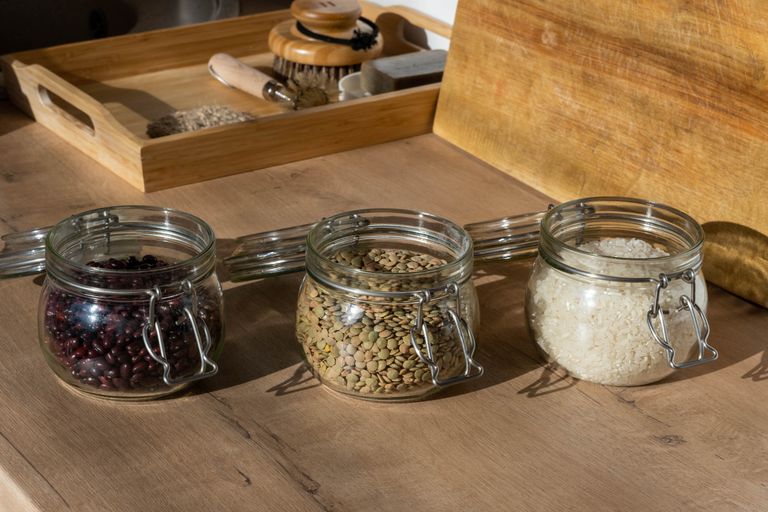
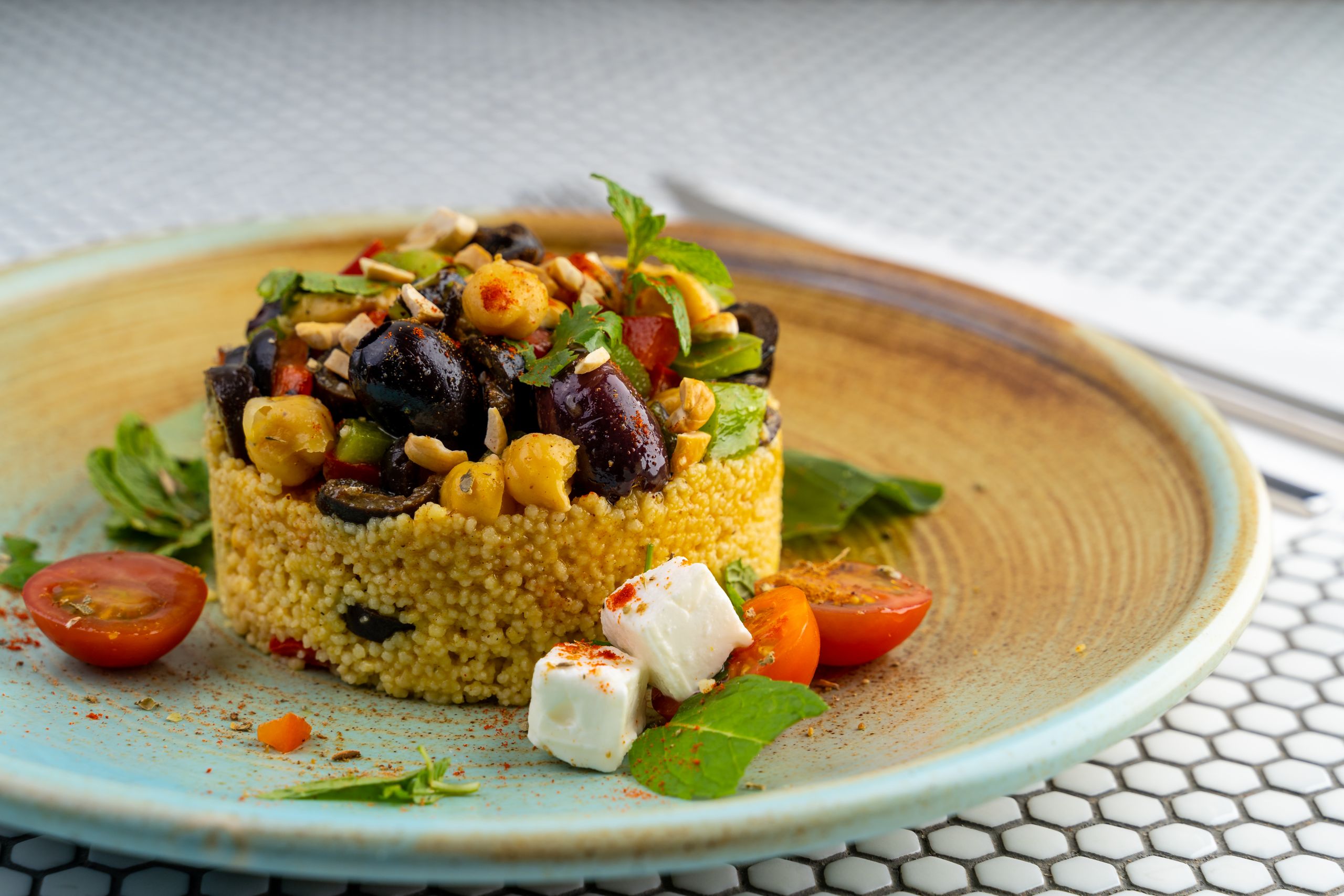
Suppose a familiar four-portion component dish uses 300 grams of dry couscous, 400 grams of prepared vegetables, and 200 grams of drained chickpeas. An eight-portion planning sheet would list 600 grams, 800 grams, and 400 grams respectively. These are arithmetic examples, not a complete tested recipe. Follow the original method and product directions for liquid and preparation details.
Notice the stage named in each amount. Drained beans and beans with their liquid are different measurements. Dry grain and cooked grain are different too. Keep those descriptions beside the numbers when shopping and weighing. If you swap a product, compare its instructions rather than assuming the replacement absorbs liquid or cooks in exactly the same way.
Check scale and bowl capacity together
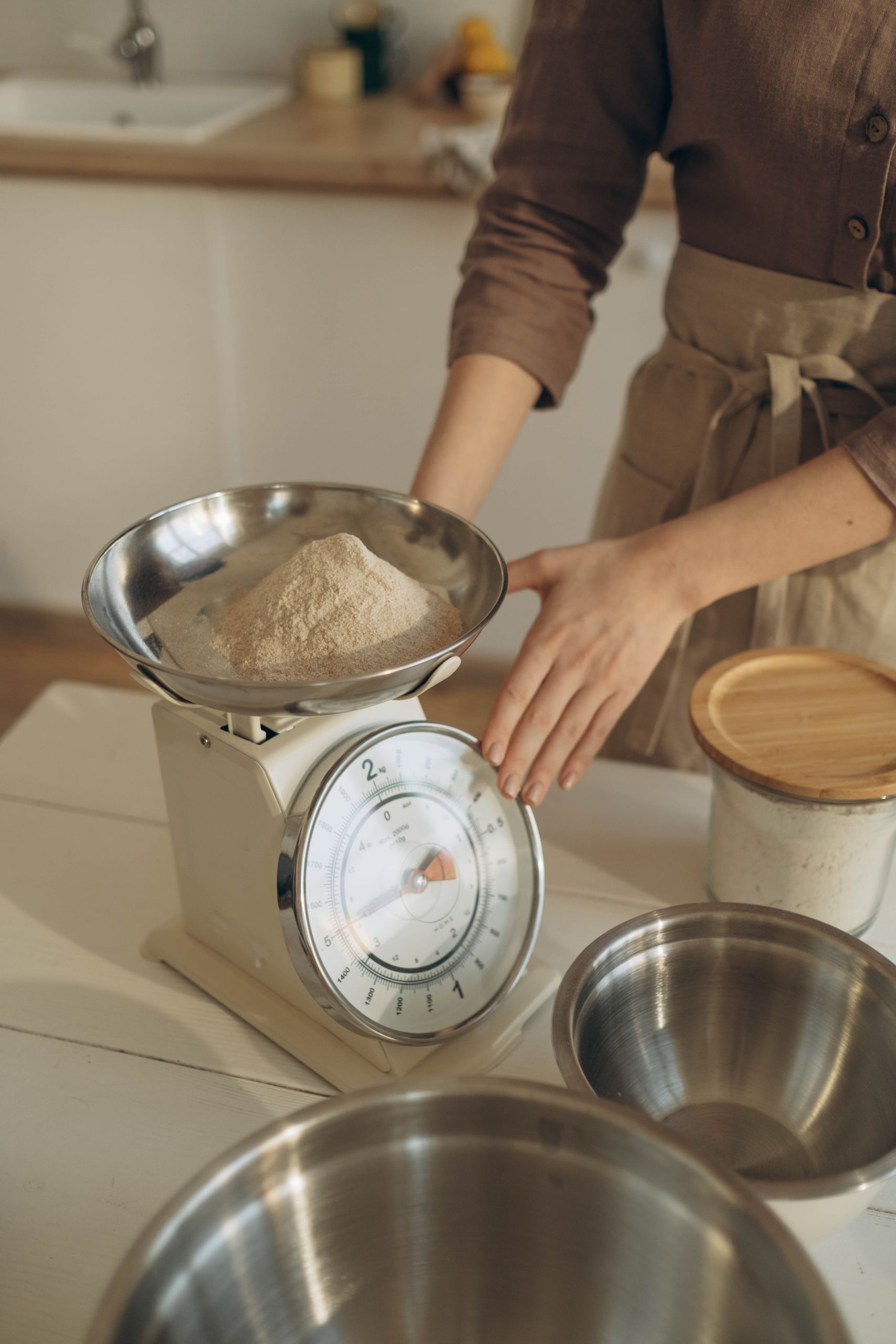
When weighing a larger batch, count the bowl as part of the total load. Pressing tare resets the displayed number but does not remove the bowl’s physical weight from the scale. If a heavy bowl plus ingredients would exceed the stated capacity, weigh in smaller stages or use a suitable lighter container. Set the scale on a stable surface and check that a wide bowl does not hide the display.
The OXO Good Grips 11-Pound Digital Kitchen Food Scale is a shopping example for readers who frequently weigh larger bowls. OXO describes a pull-out display and a zero function; those features address visibility and sequential weighing. Compare the exact model’s capacity, increments, controls, and care instructions. It is an option to investigate, not equipment this site has tested. See OXO’s specifications.
Double the workspace, not just the ingredient pile
An ingredient list scales more neatly than a crowded pan. Doubling vegetables on the same small sheet pan changes how closely they sit together and can alter the cooking result. Divide the batch between suitable pans or cook in separate rounds when needed. Measure your oven, rack spacing, and storage before choosing extra bakeware. Leave the airflow and clearances required by your oven instructions.
Nordic Ware Naturals Half Sheet pans are one rimmed aluminum option to compare for this job. The linked listing is a two-pack, so check that you actually need two and that both fit. Follow the manufacturer’s cleaning guidance for uncoated aluminum. A compact kitchen may be better served by a smaller pan used twice. Read Nordic Ware’s product and care information.
Keep cooking time separate from multiplication
Doubling ingredients does not automatically mean doubling cooking time. Pan depth, food size, starting temperature, and the appliance affect the result. Use the original recipe’s doneness cues and relevant food-safety instructions, and check each batch rather than relying on a new time produced by arithmetic. For dishes that depend strongly on technique, start with a recipe specifically written for the larger yield.
Treat baking, pressure cooking, and preserving as separate problems. Do not assume this general meal-prep worksheet provides validated instructions for them. A recipe that fills an appliance beyond its stated limit cannot be made suitable simply by cooking it longer. Two normal batches are often easier to manage than one oversized batch.
Record the result so the next batch is easier
Keep a short note of what you changed: ingredient quantities, number of pans, batch order, and the actual portions you packed. Record a texture issue as specifically as possible. “Vegetables crowded on one tray” gives you a clear next step; “double batch failed” does not. Change one practical variable next time so you can understand what helped.
Also note whether the larger batch was worth making. If you consistently leave two portions uneaten, use a smaller scaling factor or cook twice during the week. The point of measuring is to create a routine that fits your life, not to make every cooking session as large as possible.
Frequently asked questions
Do I need a kitchen scale to double a recipe?
No. You can multiply quantities in the original units. A scale becomes useful when a recipe already gives weights or when you repeatedly divide a mixture by weight.
Should every seasoning be doubled immediately?
Use the recipe’s scaling guidance when provided. Keep track of quantities, consider the salt already present in packaged ingredients, and adjust taste where appropriate and safe during cooking.
Can I use one deeper pan instead of two?
Not automatically. Greater depth changes the cooking conditions. Use an appropriate larger-batch method or prepare separate normal batches when the recipe does not explain that change.