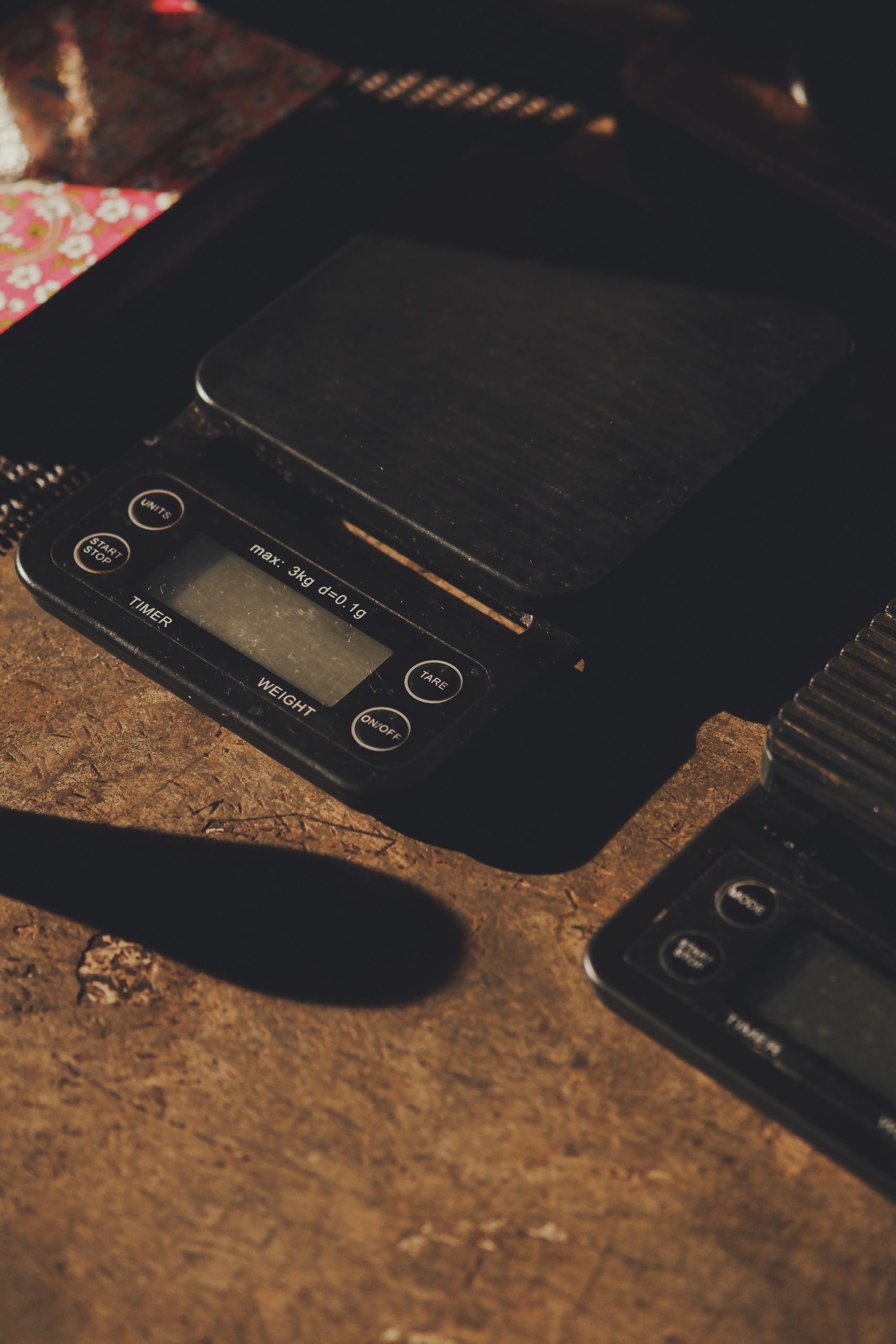
Use this kitchen scale buying guide to compare capacity, display readability, tare controls, units, cleaning, and power before purchasing.
Illustrative stock photo; not a photograph of this exact recipe or a product test. Photo by Bimbim Sindu · License.
Editorial buying guide: this article compares features and use cases, not hands-on test results or a ranked product test. Some links in this article are affiliate links; we may earn a commission from qualifying purchases. See our Affiliate Disclosure. Verify the exact model’s current manual, specifications, and price before buying.
A kitchen scale can simplify baking and recipe scaling, but it should suit your bowls and counter. Compare usability before paying for extra modes you will rarely use.
Kitchen scale buying guide: features to compare
Capacity: enough for the bowl plus ingredients.
Readability: a display you can see under a large bowl.
Units: the units your recipes use.
Tare: a convenient way to reset the displayed weight with a container on top.
Controls: usable with slightly floury hands.
Understand the specification
Display increments are not the same as guaranteed accuracy. A scale showing one-gram steps does not automatically provide laboratory precision. Read the manufacturer’s specification and intended use. A general kitchen scale may be unsuitable for very small amounts requiring specialized precision.
Think about your workflow
If you weigh ingredients one after another, check how long the display stays on. An aggressive automatic shutoff may interrupt your process. A large platform can support a mixing bowl, while a compact scale may be easier to store.
Plan cleaning and power
Check whether the surface can be wiped clean and whether water can enter buttons or seams. Do not immerse unless explicitly permitted. Compare battery type, replacement availability, or charging arrangements. Keep the manual so you know how to troubleshoot or check calibration as directed.
Decide whether you need one
If your current recipes use cups and spoons comfortably, a scale may not be the first purchase to make. If you frequently divide dough or scale recipes by weight, it may remove a recurring inconvenience. Choose for a real task, then check the exact model’s documentation before checkout.
Match capacity to bowl plus ingredients
The displayed food amount is only part of the load on a scale. A heavy mixing bowl also counts toward capacity, even after you tare the display. Check the specification and leave practical room for the quantities you use. A compact model may suit small recipe tasks but not a large pot. Do not assume a higher number of display digits means it can handle a heavier total load.
Check visibility with your usual container
A wide bowl can hide a small screen. Compare platform size, display position, and whether the controls remain reachable with a container in place. If possible, test a comparable setup in store or measure your bowl at home. Think about lighting and your viewing angle. A scale that is easy to store but awkward to read during every recipe may create more friction than it removes.
Distinguish increments from an accuracy guarantee
A one-gram display increment describes how the reading changes; it is not the same as a complete accuracy specification. Read the manufacturer’s stated intended use and limitations. Very small quantities may require specialized equipment rather than a general kitchen scale. Do not use an ordinary food scale for a purpose needing precision beyond its specification, and follow the manual for any accuracy checks or troubleshooting.
Compare ongoing use rather than extra modes
Useful everyday details include automatic shutoff timing, power source, battery replacement, cleaning, and button operation. If the scale turns off while you fetch an ingredient, it may interrupt sequential weighing. If the surface is difficult to wipe, flour or liquid can collect around controls. Choose the features that solve your real recipe task instead of paying for modes you cannot name a use for.
Questions to compare before buying
Feature
Practical check
Capacity
Bowl weight plus largest usual batch
Display
Readable under your actual bowl
Tare
Easy to use during sequential weighing
Power
Convenient replacement or charging method
Frequently asked questions
What does tare do?
It resets the displayed amount with a container already on the platform, so you can weigh added ingredients. It does not remove the container’s actual load from the capacity limit.
Do I need a scale for every recipe?
No. Many recipes work with cups and spoons. A scale is useful when it solves a recurring task such as scaling by weight or dividing a mixture.
Can I wash the whole scale?
Only as its manual permits. Many require careful wiping and should not be immersed. Read water-resistance and cleaning claims precisely.
Compare blender vs food processor tasks, batch sizes, cleanup, storage, and attachment compatibility before choosing a kitchen appliance. Illustrative stock photo; not a photograph of this exact recipe or a product test. Photo by Lisa Fotios · License. In this article Blender vs food processor: match the tool to the task Look at capacity realistically…
Use this sheet pan buying guide to compare oven fit, pan size, construction, cleaning, and storage for small-batch meal prep. Illustrative stock photo; not a photograph of this exact recipe or a product test. Photo by Antoni Shkraba · License. In this article Sheet pan buying guide: measure your oven first Match size to the…
Compare glass vs plastic meal prep containers by carrying weight, size, lids, cleaning, and permitted heating. Choose for your actual routine. Illustrative stock photo; not a photograph of this exact recipe or a product test. Photo by Ella Olsson · License. In this article Glass vs plastic meal prep containers: key tradeoffs Measure before buying…
Compare meal prep container sizes and shapes for lunches, sauces, soup, and prepared ingredients. Plan a useful set without buying by piece count alone. Illustrative stock photo; not a photograph of this exact recipe or a product test. Photo by Ibrahim Plastic Industry ( IPI ) · License. In this article Count meal prep containers,…
Use this insulated lunch bag buying guide to check container fit, cold-pack space, cleaning, and carrying comfort for packed meals. Illustrative stock photo; not a photograph of this exact recipe or a product test. Photo by GB The Green Brand · License. In this article Lunch bag buying guide: measure your packed meal Plan temperature…
Use this food thermometer buying guide to compare probes, display readability, response specifications, cleaning, and safe use instructions. Illustrative stock photo; not a photograph of this exact recipe or a product test. Photo by Anna Tarazevich · License. In this article Food thermometer buying guide: choose for the food Compare practical features Use the reading…