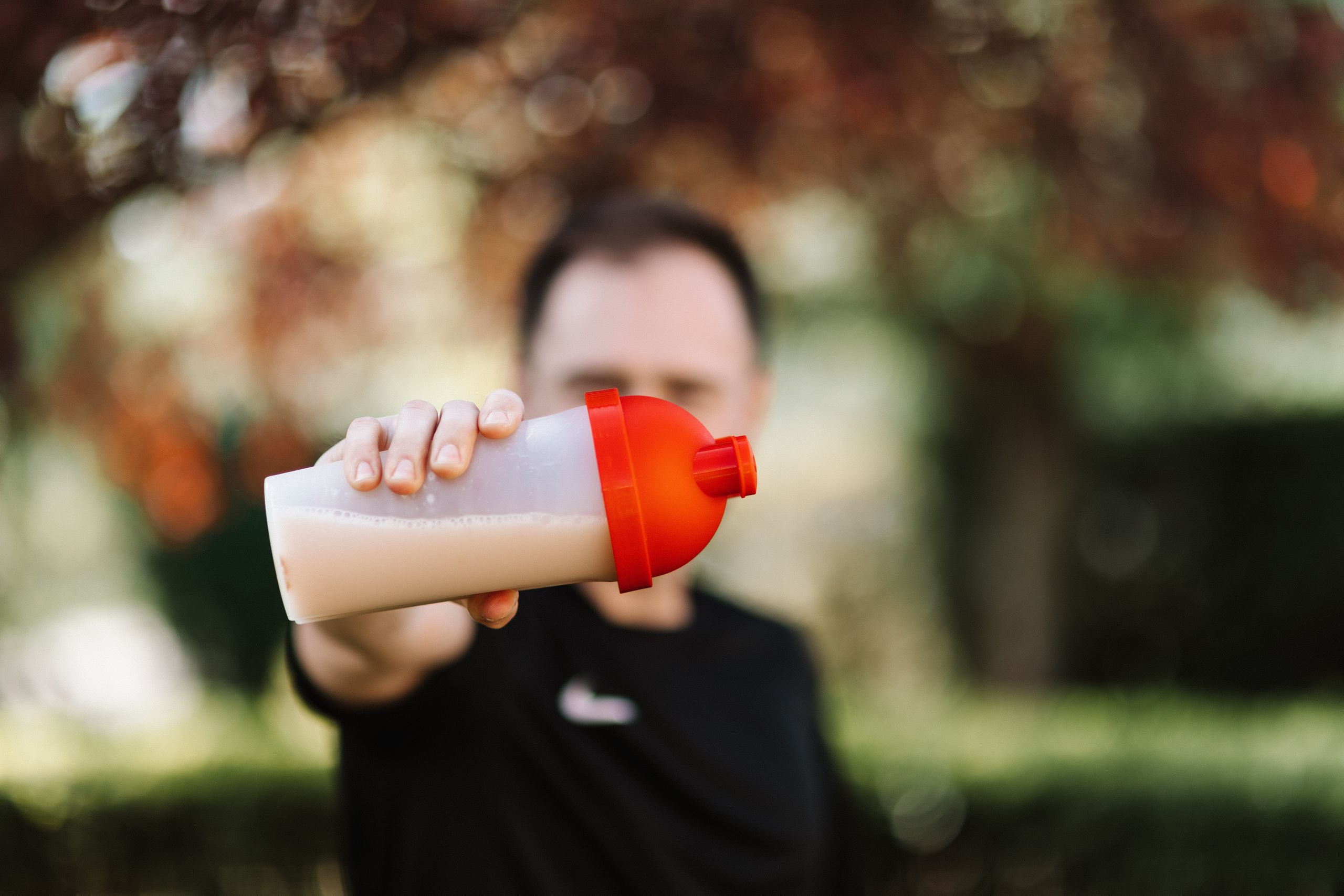
Do beginners need protein powder? Review the purpose, ingredients, allergens, cost, and evidence before deciding whether a supplement fits your needs.
Illustrative stock photo; not a photograph of this exact recipe or a product test. Photo by https://kaboompics.com/ · License.
Protein powder is a convenience product, not a required step in starting a home workout routine. Decide what problem you want it to solve before comparing flavors or buying a large tub.
Decide what you need protein powder to do
Are you looking for something portable, a recipe ingredient, or help meeting a target set with a professional? If ordinary foods already meet your needs, a powder may add cost without solving a problem. Start by reviewing a few typical meals.
Read the whole label
Check the serving amount, ingredients, allergens, and directions. Whey contains milk; other products may contain soy or additional ingredients. Similar branding does not mean identical formulas. Avoid assuming that a longer ingredient list gives better results.
Consider suitability
Ask a qualified healthcare professional about supplements if you take medication, have a medical condition, are pregnant, or are buying for a young person. Some products contain additional stimulants or other active ingredients, so do not treat all powders as interchangeable.
Compare realistic cost
Calculate cost per serving using the labeled serving amount, then consider how often you would use it. Buy a small size first if possible. Taste, texture, and tolerability affect whether an inexpensive large container becomes an expensive unused purchase.
Check evidence rather than promises
Promises of rapid muscle gain or effortless results are not a substitute for evidence. The NIH Office of Dietary Supplements fact sheet explains evidence limits and safety issues. Look for independent product certification where relevant, while remembering that certification does not establish that you personally need the product.
General education only; this is not individualized medical or dietary advice. For needs related to a medical condition, pregnancy, medications, or disordered eating, consult a qualified clinician or registered dietitian.
Separate convenience from a promised result
A powder may make a particular meal or snack easier to prepare, but that is different from guaranteeing a training outcome. Name the practical task: an ingredient for a smoothie, a portable option, or a way to follow a professionally established plan. If you cannot identify the task, begin by reviewing ordinary meals. A purchase is not required to mark the start of an exercise routine.
Read beyond the word protein
Check serving size, ingredients, allergens, directions, and any additional active ingredients. A simple-looking powder may include sweeteners, flavorings, or other compounds. Products marketed for workouts can differ substantially, so do not assume advice about one applies to another. If you take medication, have a health condition, are pregnant, or are buying for a young person, ask a qualified healthcare professional about suitability before using it.
Compare cost using a realistic serving
Divide the price by the number of labeled servings, then think about how often you expect to use it. A discount on a large tub is not useful if you dislike the taste or cannot tolerate the product. Try a small size where possible. Consider whether an ordinary food you already enjoy solves the same convenience problem without requiring another recurring purchase or a new preparation habit.
Check claims without treating certification as a personal recommendation
Independent certification may answer particular product-quality questions, depending on what the program checks. It does not establish that you personally need the supplement or guarantee the result advertised. Look for clear product details and evidence appropriate to the claim. Keep the NIH source linked in this article as a starting point, and discuss uncertainty with a qualified professional instead of relying on influencer endorsements or dramatic before-and-after stories.
Frequently asked questions
Do beginners need protein powder automatically?
No. Starting exercise does not by itself establish a need for this specific product. Consider your overall eating pattern and obtain individualized advice where needed.
Can I add it to every recipe?
Not without changing the result. Powders affect flavor, thickness, and cooking behavior. Use a recipe designed for the product or start with a small test rather than altering a whole batch.
Does a larger serving work better?
More is not automatically better. Follow appropriate professional guidance and product directions; a general buying guide cannot establish a personal dose or intake target.
Build balanced meals without counting calories using a flexible food framework. Find meal examples, variety ideas, and practical portion considerations. Illustrative stock photo; not a photograph of this exact recipe or a product test. Photo by Nadja M · License. In this article A flexible framework for balanced meals Turn the idea into dinner Adjust…
Explore carbohydrate food examples such as oats, rice, potatoes, bread, and beans. Learn how to choose ingredients and combine them in meals. Illustrative stock photo; not a photograph of this exact recipe or a product test. Photo by Dina Nasyrova · License. In this article Carbohydrate food examples to keep in your kitchen Make familiar…
Choose fresh, frozen, or canned vegetables for the meal you cook. Compare texture, portions, added ingredients, convenience, and storage needs. Illustrative stock photo; not a photograph of this exact recipe or a product test. Photo by Ryutaro Tsukata · License. In this article Choose vegetable texture for the meal Match quantity to your schedule Check…
Find easy snack combinations using fruit, yogurt, toast, hummus, and crackers. Plan portions, portable options, and safe packing for your day. Illustrative stock photo; not a photograph of this exact recipe or a product test. Photo by RDNE Stock project · License. In this article Choose easy snack combinations for your schedule Pair foods you…
Learn how to read nutrition labels by checking serving size, comparing equal amounts, and using Daily Value in context. Includes shopping examples. Illustrative stock photo; not a photograph of this exact recipe or a product test. Photo by Laura James · License. In this article Start reading nutrition labels with the serving size Compare similar…
Understand total sugar vs added sugar on food labels. Compare yogurt, check serving sizes, and make choices that fit your meals and preferences. Illustrative stock photo; not a photograph of this exact recipe or a product test. Photo by Polina Tankilevitch · License. In this article Total sugar vs added sugar: read the two lines…